Every performance figure in our eVTOL aircraft database — range, speed, payload, charge time — traces back to one engineering reality: how much energy the aircraft can carry and how efficiently it converts that energy into thrust. This page explains the powertrain technologies behind the numbers.
Battery-Electric: Today’s Standard
Nearly all eVTOLs in flight testing today use lithium-ion battery packs. Vertical take-off demands very high power for short periods, while cruise requires sustained lower power — a duty cycle that stresses cells thermally and limits usable capacity. Designers must also reserve energy for regulatory contingencies, which is why real-world range is well below theoretical maximums. Pack-level energy density, fast-charge capability, cycle life, and thermal runaway containment are the four battlegrounds of eVTOL battery engineering.
Hybrid-Electric and Hydrogen
To extend range beyond what batteries allow, some developers pair electric propulsion with a combustion engine or turbogenerator (hybrid-electric), while others pursue hydrogen fuel cells that convert stored hydrogen into electricity with water as the only emission. Both approaches trade simplicity for endurance and are especially attractive for regional and cargo missions. You can filter aircraft by power source in our database to compare these design philosophies.
Motors, Inverters, and Distributed Propulsion
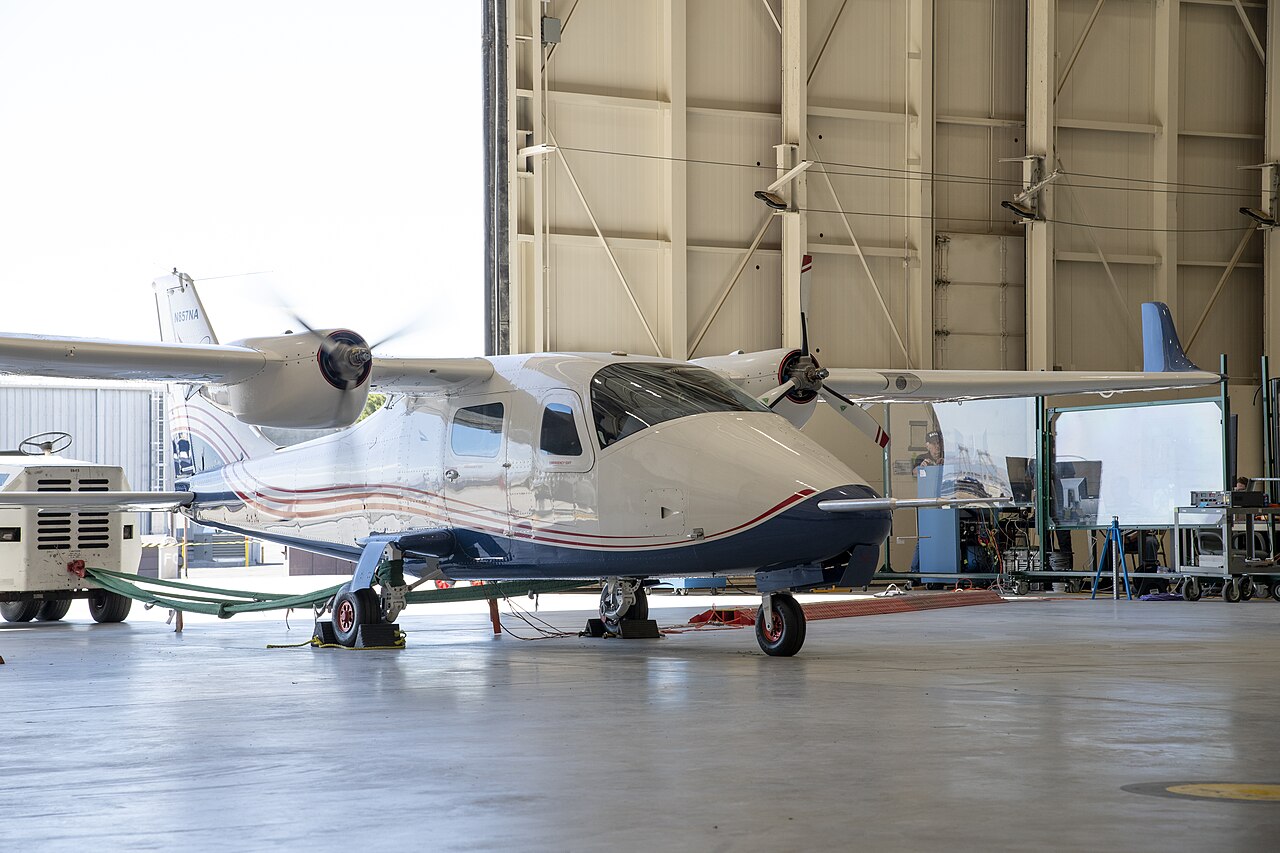
eVTOLs typically use many small electric motors instead of one or two large engines — a concept called distributed electric propulsion. It enables redundancy (losing one motor is survivable), lower noise, and novel airframe configurations such as vectored thrust, lift + cruise, and multicopter layouts. High-efficiency inverters and lightweight thermal management complete the chain from battery to rotor.